
CMEC advances clean energy and green building solutions
(sinomach.com.cn)
2026-06-17China Machinery Engineering Corporation (CMEC) is leveraging its strengths as a technology-driven professional engineering firm.
It's contributing expertise to global environmental protection across key areas — including pollution control, clean energy development and low-carbon standard formulation.
COAG's integrated smart microgrid container rolls off production line
CMEC subsidiary China Ocean Aviation Group (COAG) recently completed the assembly of its first T-HB distributed wind-solar-wave-hydrogen-storage integrated smart microgrid container.
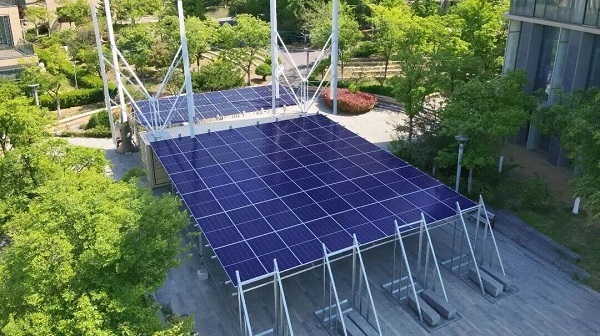
The container integrates wind power, solar power, energy storage, reserved wave energy integration capability and hydrogen storage functions. It's equipped with intelligent control and remote systems.
The innovative equipment features core configurations including 100 kW vertical-axis wind turbines, 100 kW photovoltaic panels and 532 kWh energy storage. Furthermore, it can generate 300,000 kWh of electricity annually with an on-site self-consumption rate of 95%.
By combining the time-space complementarity of wind and solar energy with the regulation capacity of energy storage systems, it effectively solves the intermittency and volatility issues of single-source renewable power generation. This equipment provides an integrated solution for China's green energy supply and distributed energy development.
SIPPR-led Henan green building standard passes expert review
A Henan provincial engineering construction standard led by CMEC subsidiary SIPPR Engineering Group Co., Ltd. (SIPPR) — the Digital Delivery Standard for Green and Low-Carbon Information Models of Civil Buildings — has recently passed expert review.
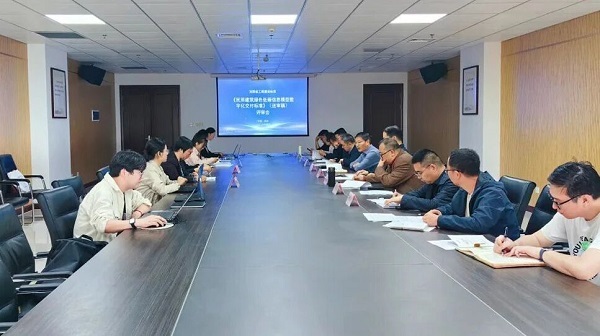
The standard establishes the first unified digital delivery system for green and low-carbon information models. It standardizes data expression and delivery requirements for core scenarios including energy-saving designs, carbon emissions calculations and green building pre-assessments. It breaks down green and low-carbon data barriers across design, construction and operation phases — making carbon footprints traceable and quantifiable throughout the entire building lifecycle.
When introduced, new civil buildings in Henan will achieve "single model throughout the entire lifecycle" for green and low-carbon information. The standard provides critical technical support for the green and digital transformation of the construction industry and it's expected to accelerate the implementation of dual carbon goals in urban and rural development.
 R&D and Manufacture
 Project Contracting
 Trade and Services


